
Sri Lankan Cooking Classes and Food Experiences: Learn Authentic Cuisine and Spice Secrets
Sri Lankan cuisine ranks among the world’s most flavorful yet remains relatively undiscovered internationally. The island’s cooking traditions blend indigenous ingredients with influences from South India, Arab traders, Portuguese, Dutch, and British colonizers, creating unique fusion reflected in complex curry blends, coconut-based dishes, and distinctive spice combinations. Participating in cooking classes or food tours provides delicious cultural immersion, teaching techniques applicable in home kitchens while deepening appreciation for Sri Lankan culinary heritage.
Understanding Sri Lankan Cuisine
Sri Lankan food centers on rice and curry but this simple description belies extraordinary complexity. A typical meal includes boiled rice accompanied by multiple curries (vegetable, lentil, fish, or meat), sambols (spicy condiments), and papadums (crispy lentil wafers). Unlike North Indian cuisine with cream-based gravies, Sri Lankan cooking relies heavily on coconut milk, curry leaves, pandan leaves, and distinctive spice blends called “curry powders” varying by dish type.
Key flavor profiles include roasted curry powder (dark, deep), unroasted curry powder (lighter, fresher), coconut sambol (fiery chile-coconut condiment), tamarind (sour note), and jaggery (unrefined palm sugar providing sweetness). The liberal use of curry leaves, pandan, and fresh coconut creates aromatic, layered flavors distinguishing Sri Lankan food from its subcontinental relatives.
Traditional Dishes to Learn
Rice and Curry
The centerpiece involves preparing multiple curries simultaneously dhal curry (red lentils with coconut milk), parippu (simple lentil curry), various vegetable curries using long beans, okra, pumpkin, or bitter gourd, and fish or chicken curry depending on preference.
Kottu Roti
This Sri Lankan Street food favorite involves chopping flatbread (roti) with vegetables, eggs, and optional meat on a hot griddle using two metal blades creating rhythmic chopping sounds. The technique requires skill and provides entertaining, hands-on learning.
Hoppers (Appa)
Bowl-shaped fermented rice flour pancakes with crispy edges and soft centers, often served with egg cooked in the middle. Making perfect hoppers requires practice mastering batter consistency and swirling technique in special hopper pans.
String Hoppers (Idiyappam)
Steamed rice noodle nests serving as breakfast staples or accompaniment to curry dishes. The process involves pressing rice flour dough through special molds, creating distinctive string patterns.
Sambols
Several varieties including pol sambol (scraped coconut with chili and lime), lunu miris (fiery chile paste), and seeni sambol (caramelized onion sambol). These condiments add heat and flavor dimensions to meals.
Lamprais
Dutch-Burgher community specialty involving rice cooked in stock, accompanied by various curries and meat, wrapped in banana leaves and baked. This elaborate dish showcases colonial fusion cooking.
Where to Take Cooking Classes
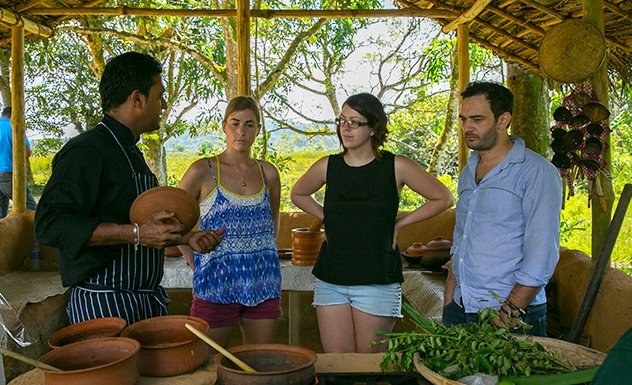
Home-Based Classes: Many Sri Lankan families offer cooking classes from their homes, providing authentic cultural experiences. You’ll visit local markets to select ingredients, learn traditional preparation methods using coconut scrapers and grinding stones, and cook over traditional wood-fired or gas stoves. These intimate classes typically accommodate 2-8 participants, allowing personalized attention. Classes usually last 3-5 hours including market visits and conclude with enjoying the meal together. Costs range $25-50 per person.
Popular home cooking class locations include Negombo, Galle, Kandy, and various locations throughout the Cultural Triangle. Many guesthouses and boutique hotels arrange cooking classes with local families.
Resort and Hotel Classes: Luxury hotels and boutique resorts offer cooking demonstrations or classes as guest activities. While less authentic than home-based experiences, these provide comfortable, professional settings with experienced chefs. Some Ayurvedic resorts incorporate cooking classes focusing on health-promoting preparations aligned with Ayurvedic principles.
Spice Garden Tours: Visits to spice gardens in Matale (near Kandy) or other regions reveal growing spices cinnamon, cardamom, pepper, cloves, nutmeg in their natural forms. Many gardens include cooking demonstrations showing spice usage. These tours suit travelers interested in agricultural aspects and spice history alongside culinary applications.
Food Tours and Market Visits
Food tours in Colombo, Galle, or Kandy combine street food sampling, market visits, and restaurant experiences. Local guides navigate crowded markets explaining tropical fruits, vegetables, and spice selections while sampling short eats (Sri Lankan snacks)vadai, samosas, fish rolls, and isso wade (prawn fritters).
Street food experiences include trying kottu roti at busy stalls, tasting fresh coconuts, sampling sweets like kavum and kokis, and experiencing tea kiosks where locals gather. These tours provide cultural context, explaining food’s role in Sri Lankan social life.
Learning Outcomes
Beyond recipes, cooking classes teach foundational techniques tempering spices, extracting coconut milk, balancing flavors, and using traditional tools. Understanding how to layer spices, when to add coconut milk, and achieving proper curry consistency enables replicating dishes at home. Teachers share family secrets, regional variations, and tips for adjusting heat levels to personal preferences.
Taking Home Your Knowledge
Many classes provide recipe booklets and encourage photographing processes. Key ingredients like curry powder and curry leaves can be purchased at markets or spice gardens (curry leaves dry well for transport). International specialty stores increasingly stock Sri Lankan ingredients, making home preparation feasible.
Cultural Significance
Food preparation holds deep cultural meaning in Sri Lankan households. Cooking classes often reveal gender roles, religious influences (Buddhist vegetarianism, Muslim halal practices), and regional preferences. The communal aspect of meal preparation and eating together reflects values of hospitality and family bonds central to Sri Lankan culture.
Cooking classes and food experiences provide delicious pathways into Sri Lankan culture, creating lasting memories and practical skills extending enjoyment long after holidays end.
Frequently Asked Questions (FAQs)
How much do cooking classes cost in Sri Lanka?
Home-based classes typically cost $25-50 per person including market visits, instruction, and meals. Hotel classes may cost more. Spice garden tours with cooking demos cost $10-20.
Where are the best cooking classes in Sri Lanka?
Galle, Negombo, Kandy, and boutique properties throughout the island offer excellent cooking classes. Home-based classes provide the most authentic experiences.
What will I learn in a Sri Lankan cooking class?
Typical classes cover rice and curry preparation, spice tempering, coconut milk extraction, sambol making, and dishes like hoppers or kottu. Classes last 3-5 hours including market visits.
Can vegetarians take cooking classes?
Absolutely! Sri Lankan cuisine includes extensive vegetarian options. Many classes focus primarily on vegetable curries, dhal preparations, and meat-free dishes.
Do I get to eat what I cook?
Yes, classes conclude by enjoying the meal together, often with the host family. This communal dining completes the cultural experience.
Can I take recipes home?
Most classes provide recipe cards or booklets. Teachers encourage photographing processes and noting personal adjustments for home replication.
Are spice garden tours worth it?
Yes, especially near Kandy. They reveal how cinnamon, cardamom, pepper, and other spices grow, often including cooking demonstrations and reasonable prices for purchasing fresh spices.
Is Sri Lankan food very spicy?
It can be quite spicy, but heat levels vary by dish and can be adjusted to preference. Classes teach balancing heat using coconut milk and controlling chile quantities.